Friday, January 15, 2016

Linkin Park: Living Things


Always recognize talent when you see it.  Even if what is produced does not tickle your fancy; any artist that can make a name for themselves has to have talent or a brilliant formula for putting their names on the map.  Linkin Park fits in this category.  Except now there is a reason to respect and like the band.

Forgive my tardiness to Linkin Park's album "Living Things" (LT); it came out in 2012.  The first single "Burn it Down" was a track with which I had a month long fling.  I admit that my heart is stolen on a weekly basis with a number of different songs.  Take that confession with a grain of salt.  "Burn it Down" prompted me to give LT a few listens.  It failed to charm my pants off as the single had.

Like most Top 40 hits, the charm of "Burn it Down" eventually wore off.  Fast forward to the present.  Somehow the track appeared on my workout playlist.  My limerence was revived.  It was like flipping through my blackbook and finding that hot, one night stand I never but should have called back.

Like any smartphone lamprey, I researched LT.  I discovered that Rick Rubin shared production with Mike Shinoda, LP's guitarist and vocalist.  Being a huge fan of Rubin's work (Metallica, Slayer, Red Hot Chili Peppers), I replayed the album.  It got many more deserved plays and just as many recommendations.  

You can now consider me charmed and naked from the waist down.  This is more than limerence.

LP fell into the nu-metal trend of singer and rapper.  Except LP had broad attraction partly because they excluded profanity from their lyrics.  This made them mother-approved listening for the ride back from school.  Like nearly every early 00's rock band, they had an obligatory turntablist, further adding to the universal appeal.  As an added bonus, the band's musical director, Mike Shinoda, delivered emo lyrics through rapping.  This made LP okay for hip-hoppers to bump and rattle their windshields with.  All of these factors made Hybrid Theory (HT) an undeniably ground-breaking album that made nu-metal more mainstream.  The numbers speak: HT went diamond in 2000.  Even in the era of buying physical albums, selling 10 million-plus of them was a big deal.  

Nu-Metal in a nutshell
All of LP's preceding work had been a serrated knife.  The defining characteristics that found them a wide audience sounded at odds to me.  Rough around the edges, sparse, distortion-driven, sometimes to their undoing. The electronic element never blended with the favored metal.  The two singers and the turntablist sounded forced.  Think of it like a metal band trying in earnest to retain their aesthetic while outdoing the big beat genre.  But with terrible lyrics.      

Skip ahead to 2003.  Nu-metal is out of style.  There were very few exceptional nu-metal bands that survived.  LP was one of them.  Where other bands of the genre failed to stay relevant, LP succeeded and maintained a consistent fan base.  LT at seals that notion of relevance at least on an artistic level.  LP's once mismatched combinations find a comfortable resting position here.  The cheese that littered the band's earlier efforts becomes absent or well-hidden. What we get is a wave summation.

Verses are traded off elegantly between singer and rapper.  Both are downplayed but not tamed, allowing vocals to sink in with an omnipresence of dark-wave.  Shinoda still raps but takes on a more sing-song delivery and is much more relaxed ("Until it Breaks"), melting into the music rather being a novelty.  Great synergy feeds between the two vocalists (Victimized).  The two vocal approaches make the emo lyrics sound at least good.  Bennington, the singer, even finds different outlets while preserving his iconic style.  There are many instances where voice-engineering works to his advantage: "Lost in the Echo" has his voice engineered with skips that fade into wispy turntable scratches.    

Mike Shinoda and Rick Rubin share the production job very well.  Rubin delivers trademark thrash but conflicts with Shinoda: the band maintains their individuality.  This marks the band and Rubin's third collaboration and is undoubtedly the best.  The sound is consistent, using shimmering, dreamy bedrock.  Hard tracks that drop with metric tons of dissonance are heavier than ever with electronica.

Yet these tracks effortlessly maintain thrash integrity.  "Lies Greed Misery" plays like a buzz saw and is completed with electronic skips and jitters.  The chorus' singing is muffled with fuzz, the rapping pulls back on the coda and then recoils like a handgun at the last minute with Bennington's jarring scream.  "Lies" is but one example where the plunge into more electronic plays to the band's advantage.  On heavier tracks (Victimized, Burn it Down), there is an ongoing hum, hidden behind hailstorms, a prime example where the two producers liase exceptionally.  Even though Victimized is an obvious punk track, electronics still lurk in the shadows while the drums haul.  "Burn it Down" has a basal heart and ringing, siren repetitions that emulsify with the bass and guitar works.  As the single, it embodies everything that LT is and does well.

Shinoda (Left) and Rubin
On softer moments, the dark-wave penetrates, dissolving the funnels and pauses the hail.  But much like the cooperation of the contrasting singers, these tracks' transitions are unnoticeable.  The whole album is saturated with dark-wave but LP makes it their own.  "Castle of Glass" could only have worked by retreating into "Minutes to Midnight" territory, with a drum machine and sparse, sample-based piano work.  "Until it Breaks" and "Powerless" serve as a dual descending outro tracks.  Broad, muted bass is ominous and cymbals skip throughout.  Ethereal background scrapes and scratches stand in the corner, like dragging a brass pipe across the floor of a steel mill.  We get more of this surprising but welcomed industrial with "Skin to Bone" and "Until it Breaks."  The industrial elements assimilate and are synergistic with the album's landscape.  "In my Remains" is a cadence-driven, lighter, poppy track, an allusion to "Minutes to Midnight."  Except here it is vibrant, occupying and organized.

The DJ settles in with the production.  Hahn clearly has talent, making his engineered noises palatable and organic. Where things are meant to sound artificial, Hahn blends them in nicely with everything human-made.  Instead of resorting to obvious samples, there's strata of ambient laters, well-woven keyboards and synthesizers ("In My Remains").  The scratching is at a minimum.  When it is there, its subtle but lacquers the crevices.  Many tracks enter inconspicuously with clean electronics but end up going in opposite directions: quietly or as a riptide.  It's a motif that finds a solid footing.        

Industrial, dark-wave, metal, rapping.  Say what you will about nu metal.  LT is melodic and ethereal but remembers what it came for: to kick you with steel toes.  "A Thousand Suns" may have been the band's concept album but everything on LT is airtight.  It is not just a collection of singles but a cohesive, dense album.


Saturday, January 9, 2016

Wha-wha Worthy

I was put to death when I went in for surgery.

Don't forget to interject a good Michael Jackson joke - oh, wait.

The anesthesiologist told me beforehand that I would be brought below an autonomously functioning level.  All of my vitals and governing chemical would be done through him rather than my own brain.  My brainstem was essentially dead.  If my heart rate got too high, he would use some kind of potassium based chemical to bring it down.  Too low, he released a sodium or calcium based chemical on the heart’s conducting fibers.  Instead of my own breathing, I was administered a breathing tube and respirator.  And I thought to myself it would be great to have something like that in everyday use.  Getting to stressed and just pump the brain full of some kind of serotonin.  Not motivated enough?  Hit a button to boost your adrenal release.  Not putting on enough muscle or need to lose weight?  Just flip the switch for some somatotropin.  But then I remembered that we already have stuff like this: they’re called drugs and the people who use them are addicts.  So much for that idea.

How to Have Comfortable Long Distance Training Runs

       There are a lot of preparations to be made before you actually do a long distance run.  I have had the immense chagrin to be doing marathon training for years.  Some of my runs went as long as eight hours.  Silver lining: I pay attention to what I am doing and think of ways to make the runs not (as) terrible.  Let's cover the day before, of and after your waste of a good Saturday or Sunday.

Day Before
  1. The start of the hydration process.  The average-sized American should be drinking 2.2 liters per day, plus or minus .5 liters on the heavier or lighter end, respectively.  On the day before a long run, add another liter to that 2.2 base level, plus or minus .5 liters.   
  2. Get enough sleep.  You should be doing this already.  The obvious reasons: the more mentally alert you are, the more enjoyable the run.  Sleep is also what turns all of the calories you consumed during the previous day into adenosine diphosphate, the building block for your body's energy.  No sleep means no energy.  If you like to party, one day this whole trendy long distance running will catch up to you.  If it has not, you are probably still an undergrad and lack of sleep is how you thrive.  In that case I hate/envy you.  Also, do not major in humanities.    
  3. Gear prep.  No matter what time of the day you do your run or whether you are a morning or afternoon person, you are always going to be scatterbrained if you prep your gear immediately before.  It is your unconscious way of procrastinating.  Your body knows what it is in for.  Here is what your gear should include when you prep the day or night before: 
    1. Cell phone.  You never know if or when you might burn out or keel over during the run.  Best to have a cell phone if you end up needing to call a cab or get a lift to bring your sorry derrier back to the house.  Though hopefully you will do enough of the other preparations to prevent a walk of shame.  
    2. ID.  This is for when you do actually keel over.  The ID will save your family and friends the hassle of identifying your body at the morgue.  More likely, it will come in handy if you need to make an emergency purchase and you need proof of identity for when you use a...
    3. Credit card.  As will happen from time to time, you will run out of energy and you will need calories.  Keep this on you just in case you need emergency sustenance.  On long run days, I like the high-brow, gourmet products of Hostess and Krispee Kreme.  And the great temple of 7-11 is ubiquitous and known for selling both of these patron saints of excess.   
    4. Water.  Some people like the Camelback and some like to hold their bottle.  If you are running longer than an hour, you will need Gatorade.  Do not opt for the zero calorie kind.  If you do, you may need to make that 7-11 intermission.  
    5. Food.  If you are unwilling or unable to stop at a convenience store, carrying anything carbohydrate rich will do.  This may be the only time you will eat something sugary.  Though fat has more calories per gram, carbohydrates can get packed quite easily into any baked good.  Once you start gassing out, the food that will snap you out of it the fastest will be a white starch.  This is because it is the simplest food for your body to turn into glucose.  A pastry can have you back to your old self in as little as 15 minutes.  I recommend food for runs longer than 2 hours, as this is the most likely time to bonk.  
    6. Toilet paper.  Sometimes you may find yourself needing to drop the kids off without a port.  I try to get this done before a run.  Even if you do, you will run into this problem, as running is a "mechanical laxative."   
    7. Vaseline or body lubricant.  Always have this.  Even at the first sign of a little bit of rubbing, apply immediately.  It is the difference between a painful run versus a painful and stinging one.  A shower with a freshly-made rash is an even worse experience, worthy of a Wilhelm Scream.  All that salt caked on and in your skin and hair gets washed off in the shower and into your new rashes.  It is as painful as applying iodine to cuts.  Except these are much larger than cuts and on sensitive areas: your inner thighs, butt crack, nipples and armpits.
    8. Camelback.  You will need something to carry items 1-7.  So you might as well have something that is built for carrying water.  I always carried a Camelback for ultra training.  Not only does it carry your water and valuables but the extra weight serves as a great training buffer.  When race day comes, you won't have to worry about any of the aforementioned items; aid stations provide all of them.  Even inmates get a last meal.  Consider your training gear to be like the warm up swing of two or three bats before stepping up to the plate; psychologically you will feel less encumbered and will actually be faster.
  4. Exercise the day before.  If you are prepping for the long run, chances are you are working out the day before too.  We distance runners are all the same: we are our own schizophrenic dom-sub couple.  The workout the day before should not kill your legs. The last thing you want is going into a long run with depleted glycogen and overwhelming soreness.  Be sure that your weight day is not an exclusive leg day.  Fellow split trainers, you know what this means.  A little soreness from a couple of leg exercises is okay.  On the extreme, the agony from a leg-day is going to make your run reminiscent to Paths of Glory.  Another option is a swim or a short, intense cardio session.  I like doing interval biking or stairmill.  This kind of cardio kills but does not affect the long run.  This is because interval training does not use the same muscle fiber types or energy pathways as endurance activity.  This same logic applies to why leg strength training is also okay to do.  You should also be lifting weights anyway, you pansy.
  5. Carb Load.  A typical endurance athlete will have a diet that is 60% carbohydrates.  You should be eating 67-70% carbohydrates the day before a long run.  You can get away with 60 but you will have a higher likelihood of hitting the wall.  Not hitting the wall - at least not early on - will guarantee a better run.  There should be no reason to overeat so long as you increase the percentage of carbohydrates of a regular daily calorie intake. 
Day Of
  1. Diet and calorie intake.  One of my favorite sayings is "the unhealthiest day of a runner is race and long run day."  Feed yourself about 30% of what your daily calorie intake will be for breakfast.  The objective is to get a healthy amount of carbs, some fat to slow the digestion to makeshift a slower carb.  Some protein in your breakfast is for amino acids for gluconeogenesis.  Protein also prevents the benign but consequential muscle catabolism caused by prolonged exercise.  Choose a breakfast similar to oatmeal with cocoa, a scoop of whey protein powder and a tablespoon of olive oil.  Other options are buckwheat pancakes, home fries with eggs or bacon or whole grain cereal with whole milk and a protein shake.  Along with breakfast, you should also caffeinate.
  2. Caffeinate.  Drink coffee or some kind of hippie drink with a picture of nature or indigenous person on the label.  If you do not consume caffeine, consider a religion other than Mormonism.  Not only is caffeine good for being energy and triggering production for more of it, but it also has a laxative effect.  If you want to shed some excess weight, caffeine will trigger a nice, healthy bowel movement.  Voila, you are now two pounds lighter.  If you are a huge fiber fan, maybe even five pounds.  Caffeine also has a long half-life and will last you through the strenuous hours ahead.     
  3. Prioritize.  Get that run out of the way as quickly as possible.  The longer you wait, the less likely it is to happen or the less time you will have to do it.  Unless you like running during the warmest part of the day, do it almost immediately after breakfast.  A nap can be taken afterwards so you can get re-energized for errands and/or chores.  What a great Sunday this is shaping up to be!  
  4. Warm-up.  This should take 15 minutes at the very most.  Start with foam rolling then stretching your problematic areas.  Typically this would be calves, hips and IT Band.   Then warm up your gluteus with some bridges and controlled lunges.  Fire up the core with planks or any static ab exercises.  Repeat your exercises 3 times.  
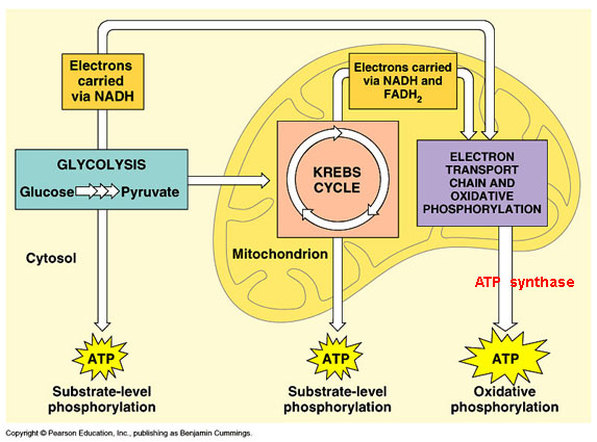
  5. Run.  Your first ten minutes will probably suck.  This is your body trying to figure out what the hell you are doing to it.  If you want more explanation, read the rest of this paragraph.  What your body is doing is switching from readily-available, anaerobic fuel sources.  This would encompass cellular inclusions with fatty acids, glucose and amino acids for fuel.  These are molecules that require little to no oxygen to turn into ATP.  Once you have burned through that fuel within the first 2 minutes, your body goes into panic mode, trying to make more ATP somehow. No matter how in shape you are or how long you have been running, you will always fall into this problem.  It gets better but never fully goes away.  But once the muscle starts understanding that it needs oxygen to catabolize macronutrients to make muscle fuel, you will ease into your long run and enjoy a natural flow.
  6. Hydration.  This is the most important part of your run.  Obey the rule that "if you're thirsty you're already dehydrated."  So drink even if you are not thirsty.  A good approach to this is to already know how much water you lose from cardio training.  Weigh yourself after a workout to see how much you lose.  Then assume you run at a slightly less intense pace for your longer training periods.  This means you will drink a little less than what you lose from an hour of more intense cardio training.  
  7. Dealing with soreness.  If you are adding to your mileage, you will feel the fire down under towards the end of the run.  Fortunately, there is a way to alleviate this.  Your blood may be pooling, unable to dispose of or neutralize metabolic wastes.  To circulate blood out of your legs, you will need bigger muscle contractions than those provided from a limited running motion.  By doing sets of 20 body weight squats (active stretching), you can get the lactate, creatnine, carbon dioxide and carbonic acid (HCO3) out of the lower extremities.  Your squats should be ass to grass and all the way back up.  The first 5 are just awful and may require holding on to something sturdy.  Do 20, walk for or jog for a minute and then do another set.  Repeat as many times as needed.  You may be surprised by how well this actually works.
  8. Post-Run.  Once it is all over, get 20 grams of protein via liquid form and 80 grams of complex carbs.  I like sweet potatoes or two pieces of bread with two tablespoons of hummus.  Maltodextrin or meal replacement carbohydrates also work.  Some people even swear by milk for both the protein and carbohydrates.    
  9. Washing your nasty ass.  An ice bath my or may not be necessary.  I have never had much luck with an ice bath reducing DOMS.  Others advocate ice baths.   
    1. Do not take a hot shower.  Regardless of whether or not you do an ice bath, never take a hot shower, as it will only increase swelling to what are essentially damaged muscle fibers.    
    2. Ice Bath.  If you opt for it then do it before a warm shower. Take a deep breath and just plunge right in.  Fill the bath tub halfway with cold water and then dump about 10 pounds of ice into it.  Think of it as a Polar Bear Run (Courtesy of those plucky Russians) minus the pleasant sauna beforehand.  Set the timer for 20 minutes and good luck.  
    3. Epsom salt.  This is the best option and chronic pain patients think so, too.  It works through osmosis and is able to drain out swollen tissue and other metabolic wastes.  This is much more pleasant than the ice bath, arguably more effective and you do not need to empty all of your ice cube trays for it.  
  10. Stretch.  These would be a repeat of all the problem areas you did before the run and an addition of all the primary running muscles: quads, hamstrings and butt.  Remember to always foam roll then stretch. Your muscles are still having a ton of neural input to contract (wave summation).  Stretching them would be like pulling a rubber band apart only to have it recoil.  To override the neural impulse to contract, you must override the golgi tendon and muscle spindle.  The only way this can be done is through a preliminary foam roll or massage.  If you are lucky enough to have a cabana boy on stand-by, let him give you the rubdown and whatever else.  It's not my cabana boy so use him however you want.  
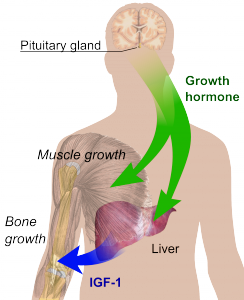
  11. Nutrition.  This is the day you can go a bit crazier.  You just did an extraordinary amount of cardio.  Feel free to tack on the extra calories.  Use this calculator to see how many more calories you can get away with.  You should skew the calories to 25% fat and protein with 50% carbohydrates.  Protein is for growth and repair.  Fat is essential for hormone production.  More anabolic hormones (e.g., testosterone, somatotropin) means you will have more reason for your body to use new protein to repair the damaged muscles.  And since you just worked out your legs, your body will also be more inclined to make these anabolic hormones.  The bigger the exercised muscle, the more growth hormone (GH) is made.  The more rigorous the exercise, the more hormones and proteins need to be synthesized.  You just did both, so feed your body fat and protein.
  12. Rest.  Nap if you need it.  At the end of the day, definitely get more sleep than normal.  This is the only time of the day where GH is made.  Human growth hormone is pivotal in skeletal repair as well as fat catabolism, glucose release and muscle building.  The more sleep, the more GH made.  Like your androgens, the more rigorous the exercise and the larger the muscle, them more need for GH and its functions.  Sleep is also where your body is able to use vitamins and minerals from your diet to donate electrons to free radicals made during your heavy exercise.  There will be more on this in the next section. 
Day After
  1. Supplement.  As mentioned, vitamins and minerals obtained from a balanced diet and supplementation will ward off toxic oxygen.  Though you probably eat a lot more than the regular person because of your social-life killing workout regimen, you do go through more vitamins and minerals.  Both are used for biosynthesis processes which you, as an endurance athlete, are operating on well beyond normal capacity.  Supplementing is a good safety against the potential damage from cell turnover and free radical production. The jury is still out on the efficacy of vitamins and minerals but a 5 cents a day is hardly a steep investment.  Hell, your celebratory jaeger bomb and/or coke addiction is many times more expensive.  The best part is you can easily grind up the vitamins and snort them with the rest of your paycheck.  If you're lucky, something has to be in that multivitamin that can enhance the effects of benzoylmethylecgonine.  And I am sure the extra iron will be good for adjusting to your daily nosebleeds
  2. Diet.  Follow what you did yesterday with a higher emphasis on fats and proteins.  Be careful about a slightly more voracious appetite.  Your run was yesterday so you are only in a slightly heightened state of metabolism.  Your basal metabolic rate is almost back to normal.  Do not overeat and lose the fat loss benefits of your run.      
  3. Exercise.  I recommend taking this day off.  Should you be mentally ill enough (me) to exercise the day after your long run, consider an upper body weight weight day or swimming. Some of those same body-weight squats you did during your run should also be included just to prevent blood clotting and increase waste removal.   Consider also going into therapy.  
  4. Stretch and foam roll.  This may or may not speed up recovery and decrease DOMS.  It does guarantee better circulation, i.e. waste removal, and will just plain feel good.  
       There is a lot of explanation for these seemingly simple steps.  If you are like any typical runner, your head is thicker than the souls of your Brooks Beasts.  Explanations and science solidify the reasons these steps are necessary to ensuring that your run is something you dread but not avoid.  

Wednesday, January 6, 2016

Steroids

I was reminded of the 2007 steroid controversy while reading an old issue of Sports Illustrated. When most people thought Bonds had retired from baseball, an article in this magazine disclosed Bonds trying to secure a position on any lineup.   He even made an attractive offer by agreeing to just 200k/year, a rate among the lowest-paid athletes.  Remember this was the summer after Bonds had come off of his 2007 home run record. 

Bonds' lay-off is because Congress and millions of fans have a lack of understanding of steroids. By association, Bonds’ steroid scandal made him too “controversial” for any team to consider him for a place on their lineup.  This fallacious consensus shows how little people know about steroids, drugs in general, nature vs. nurture and how professional sports work.

Believing that injecting steroids instantly turns you into a Bonds-caliber player is pure naivete.  All steroids do is is act as an anabolic hormones, something your body already produces.  This is in the form of testosterone, a hormone that is found in both men and women.  There is a higher amount in men, explaining why they are more muscle-dense than women.  Testosterone encourages the retention and building of muscle.  T also favors the breakdown of fat and release of glycogen in the form of glucose for the body's source of energy.  This is another action of anabolism.  

Bonds and many other athletes choose steroids not out of laziness but because they want to continue playing at the same intensity. Steroids are not for those who are trying to cut corners; if you’re not training, practicing or eating a proper diet, you will turn into a mush.  This is exactly what happens even when you are not a steroid user.  Barry Bonds was training for six to eight hours a day when he was at his peak.  That diligence made him a superstar in the 90's before he even anticipated steroids.

Bonds was already a highly-accomplished player throughout the 90's.  His batting average during his college career was .450.  That's not something you acquire from injecting synthetic hormones and then hitting the weights.  You must have good fundamental skills for a sport to do anything that is that technically amazing.  Bonds is by no means lazy.  Just making it to the professionals is standing out of thousands of other outstanding players.   Bonds started taking steroids well after he had already established a name for himself.

Then he turned 40.  For those of us who are not there yet, this is what that means for an athlete of Bonds caliber: you no longer roll out of bed easily at 5:30, carbohydrate load, caffeinate and then workout and practice for the rest of the day.  The late 30's is when an athlete's lifetime of wear and tear starts taking a toll.  Bonds resorting to steroids was to continue playing at the level he was.  THis is a testament to how willing he was to keep working just as hard as he had when he first decided to be great at baseball.  His mind was willing but his body just wasn't keeping up the way it used to.  As any athlete would argue, most of your talent comes from the amount of work you put into.  Very little has to do with "innate" abilities.

In an article dated September 6th, 2011, a newspaper, Mail&Guardian, ran an article on ultra marathon runner, Dean Karnazes.  Exercise physiologist, Laurent Messonnier from the University of Savoy in France studied Karnazes and had incredible findings.

One of Karnazes' unique bodily features was specific to his VO2 max, a measure of the amount of oxygen a person can intake and then circulate to their bodily tissue.  The average person has a measure of 45 milliliters of oxygen per kilogram of body weight per minute. With proper training, 60 is possible. Mr. Karnazes' is 85, an innate and anomalous level.

Messonnier also found Karnazes' lactate levels to be completely abnormal.  Lactate is the acid that fills the muscles during strenuous activity if insufficient oxygen is not delivered.  Lactate can then be shuffled back to the glycolytic cycle to be used for more energy production.  This process, however, is very slow, resulting in acute muscle soreness.  To no surprise, Messonnier found that Karnazes had the lowest recorded lactate levels than any other athlete ever.  Because of his high VO2 max levels and mutant ability to recycle lactate, Karnazes can run longer without pain and recover faster.

The only difference between Bonds and Karnazes is that Karanazes did not need steroids to do what he does.  But if you're going to disqualify someone with an "unnatural" advantage, you have to disqualify someone with a "natural" advantage. You can't get up to the level of Karnazes without genetics.  The Bonds trial is now saying that there are legislators who are allowed to split hairs on the subject.  Advantages, whether they are inherited by natural or synthetic means, are all the same.

Athletes still have to train hard.  Karnazes still has to run from San Francisco to Palo Alto every day to keep up his prowess.  Bonds has to be up at dawn doing snatches and clean and jerks.  Whether they were born with their unique physiology or acquired it is subject to dispute. The uncertainty is whether or not Karnazes was able to acquire this physiology or if he was born with it or if it was a synergistic or epigenetic process.  Even an advantage is genetic or artificially inherited, you won't become great unless you take up the second job of perfecting your craft.  This goes for any profession, not just athletes.

If they're lucky, an athletes’ careers only last until their early forties.  Some gymnasts peak in their late teens.  When a player’s performance starts inevitably going downhill, their paycheck and draft chances follow.  It's not like government where useless employees stay on the payroll just because no one has the hear to fire them. Just like the people at Enron, sports players will cut any corner they can to keep their lifestyle.  Bonds may like baseball, but he ultimately has a wallet he is trying to keep filled. If that means having to take steroids, he will do it.  Anyone would do what Bonds did.  Being one of the greatest players in the history of the sport comes with a lot of pressure.  Age is just a sword of Damocles for everyone but even more so for an athlete.  No one has empathy for Bonds because no one knows what its like to be the best.  Next to that, no one knows what its like to lose that title and to fade into obscurity.

The mindset that athletes like Bonds are desecrating the spirit of baseball is another subject for scrutiny.  Baseball fans think the sport is no longer the apple pie national past-time they like to believe it once was was.  Understand that professional sports is a business.  "Selling out” was news from two centuries ago. To become good at something and get paid for is what we call capitalism, the basis of which America operates.  By association, this is the spirit of American sports.  If you knock "selling out" in baseball, you're really knocking the entire notion of capitalism.  To be betrayed with athletes' steroid use is the same gullibility for those who felt betrayed by the 94-95 Baseball Strike.  News flash: Santa doesn't exist.  Also, athletes aren't infallible and they want a 7 figure paycheck.

To drive this point home harder, in 1997, Mark McGwire outperformed Sammy Sosa for the season's home run count.  But Sosa made more money than McGwire.  This is because Sosa bowed down to more corporate feet and loaded up on more endorsement deals than McGwire.  In 2003, Kobe Bryant endorsed for Nutella, a desert spread that he has probably never eaten.  Before that, Shaquille O’Neil shilled for Pepsi Co. and Michael Jordan for Coca-Cola and its subsidiaries.  The spirit and integrity of baseball already has been hijacked by consumer- and commercialism.  The day someone decided to put sports on TV was the day that the concept of sports for their own sake died.

All Bonds wanted to do was keep playing baseball. The desire in spite of old age is the very baseball spirit that everyone claims he’s destroying.  Playing because you want to play and seizing whatever means to do it is heroic.  Finding ways to continue doing what you love regardless of the internal and external consequences is a devotion most of us have yet to experience.

Retiring because of the cultural views of old age is a nonsensical.  Bonds entered middle age.  This carries many daunting implications for both your body and reputation.  Bodily, your muscle mass starts dropping or becomes harder to maintain and more so to build; your maximal power output and sprinting speed wanes; your midsection starts enlarging; energy levels start decreasing and the mind starts losing its edge.  This is why anyone starts taking steroids who is in organized sports.  Your career depends completely on your physical abilities.  When your physical abilities start to deteriorate, it's a slow and embarrassing road to retirement for an athlete.  To keep his sporting career alive, Bonds turned to steroids.  Even regular men have turned to taking steroids for these exact same reasons.  The loss of the benefits of testosterone is the very reason why synthetic steroids were invented in the first place.  Bonds' T count started dropping and the solution was to start juicing.

Compound this with what we all know about how the general public feels about celebrities who are past their prime.  Think of all the criticism Madonna, Mick Jagger, Hulk Hogan, Meg Ryan, Marissa Tomei and even Michael Jordan received for trying to Weekend at Bernie's their career. For that matter, think of any old celebrity or public figure.  Eventually they all become the butt of old people jokes regardless of how loved, inspirational or revered they were in their prime.

Numbers dictate sports.  People think that steroids make these numbers meaningless.  One of the ongoing arguments is how many home runs were because of Bond's athleticism and not the steroids.  As stated before, Bonds was already a superstar player.  Another aspect to consider in this is the highly nebulous definition of a drug. The FDA defines it "articles other than food that are intended to affect the structure or any function of the body of man or other animals.” This definition can be construed as basically anything one can put into their body.

Like Bonanza Jellybean said in Tom Robbins’ famous book, Even Cowgirls Get the Blues, “every living thing has a chemical composition, and anything that is added to it changes that composition. If you eat a cheeseburger or a Three Musketeers bar, it changes your body chemistry. The kind of food you eat, the kind of air you breathe, can change your mental state. Does that mean you're drugged?"  By the FDA and Tom Robbins, we can rightfully say that hot dogs should now be investigated to see if they may have given Babe Ruth an unfair advantage for his home run records.  After all, he never seemed to go a game without one.

Another clearly defined performance enhancing drug that is still legal in sports is caffeine.  It works as a stimulant by creating a cascade effect that ultimately results in the body's sympathetic nervous system response.  This same mechanism is also why caffeine causes the user to crash later on: the "arousal hormones" that should have been released throughout the day are used up in mere hours.  To address this deficit, one either sleeps to synthesize more hormones or takes more caffeine. Yet it caffeine is only being "closely-monitored" but steroids are banned.

Just like Babe Ruth and his hot dogs, it can never be proven or disproven whether or not steroids even helped Bonds. As stated earlier, no one was interested in Dean Karnazes until he started breaking Guinness World Records for endurance running.  If Bonds had not take steroids and ended up hitting 800 home runs we would be applauding instead of indicting him.  Also stated earlier is to accuse Bonds of cheating is to assume that one can take steroids, not have to work and automatically become a rock start athlete.

Drug effects can vary.  What is detrimental to one person can be advantageous for another.  The assumption that steroids can have nothing but advantageous effects would have been reasonable had it not also been in lieu of another drug scandal that transpired a decade before.

Gary Hall Jr., in 1998 was disqualified from sports for a year after being drug-tested positive for THC, the active chemical in marijuana.  Hall was a world-record holding short distance sprinter in swimming. In 2004, he was the fastest swimmer in the world. His 50 meter freestyle was clocked at 21.76, a speed technically faster than what Michael Phelps in his prime could reach.

When Hall was DQ'd, it was on the grounds that marijuana stands on the same echelon of abuse and effects as steroids.  To name one source, the British  Medical Journal puts cannabis as the least harmful drug anyone can use.  The effects are psychoactive and sympathetic, meaning they induce the "rest and digest" response of the body.  Specifically, cannabis is a depressant.  Lumping cannabis into the same category as steroids puts a major inconsistency in the legislative treatment of drugs in organized sports.  If cannabis can disqualify someone from professional sports, then alcohol should also be grounds.  Yet all Vin Baker ever got was a non-renewed contract for the Rockets.  He was a binge drinker and an Olympic and MVP star.  No one even questioned whether alcohol might have made him into a drunken master on the court.  And Baker is not an isolated incident.    

On personal note, it's easier to destroy than create.  Most of the criticism towards Bonds comes from the armchair philosopher fans.  As if they know what it's like to get up early in the morning to practice batting, train the entire day until sunset in the weight room.  It's a discipline and a type of work that very few people can emulate, let alone empathize with.  Making it to the pros is is a faraway star when you start training as early as your first steps.  Few people can understand and invest, day in and day out, year after year, injury after injury, with nothing more than blind faith and hard work.

Regardless of how many crazed fans will spit vitriol on the contrary, athletes are people. They pass gas, cry, womanize, have bad habits and will - for lack of a better word - cheat by taking performance-enhancing drugs.  But many regular people have and will cheat if their life's calling and purpose are at risk.  

Friday, October 11, 2013

Bridge-to-Bridge

       So the Bridge-to-Bridge was a huge success!  The gathering started at 7:30 at Justin Herman Plaza on the corner of Market and Steuart Street.  That is the piazza that has that weird abstract art fountain in the shape of elongated cubes, with water coming out the ends.
Eat your heart out, MC Escher.
       The actual race started in front of the Ferry Building, followed the Embarcadero along the piers, past Fisherman's Wharf and Aquatic Park, up Fort Mason, through the Marina, along Chrissy Field, turned around at the bottom of the Presidio and returned to the Marina Green.  The weather was in a comfortable high 60's and tapered off to high 70's at the height of the day.  I had stashed some clothes in my locker at the gym, thinking I was going to need to change immediately into warmer attire after the race.  But that day was an anomaly for San Francisco, so I was able to stay in my sweaty, damp running clothes and not freeze my ass off.  


       Finishing time for your's truly was 37:50.  Pacing was around 9.6 mph, which is roughly a 6:06 mile per hour pace.  A little bit under 10 mph.  That is my best time, so far, for a 10k.  Unfortunately it wasn't official. That's right - I have relapsed and am crashing races again.  Can't help it - I compete too much.  I'd go broke from entry fees if I paid for every single race.  Besides, I'm not paying 50 bucks for a 6.2 miles race.  I have crashed cheaper races that were longer distances before.  Plus I thought it would be more bad-ass to show up, clean house and then casually go home.  I'm cocky like that.
        My client and friend David also showed up to the race.  We met up at the end and had a nice walk back along the course all the way to the Embarcadero train station.  David came in at a very respectable 55:00 minutes.  David has been a client for 4 years now.  David was and still is an avid hiker.  Before me, he had never worked out in a gym before.  4 years later he's a running and weight-lifting machine.  What an inspiration!     
The two champs!
       I had crashed the night before at Charle's house.  After showering at his place after the race, we went to Squat and Gobble at Haight and Fillmore.  Charles had eggs benedict, I had a Greek Omelette.

Squat and Gobble.  For some reason I think gay
neighborhoods make more jokes about gayness than straight
people do.  It must be a rite of passage or entitlement thing.  

       Then we walked up to the Castro and sought out Charles' prized vitamin shop, Active Nutrition.  If you haven't been there, I suggest you pay a visit.  Cheap, high quality supplements of all kinds, a huge selection on protein bars, and, best of all, Todd, the owner, who offered to suck me off if I wrote him a good yelp review.  Totally worth your time and money.  This place puts GNC and Vitamin Shoppe to shame.    

Judging by its appearance, you wouldn't think the owner
would be soliciting sex for good PR.
       Afterwards, I said goodbye to Charles and his cats and headed home for Abnormal Psych homework.  And that concluded my day.  
       Stick around on the 20th for Morgan Hill Half Marathon.  This time I plan to beat that 1:22 official time.  That's right - I am actually registered for it.  I have an incentive to do well.  This should be interesting.    

Tuesday, October 1, 2013

Upcoming Events

I recently went on a splurge for events and signed up for about 5.  Here is a preview of what I will be doing in the upcoming months:

October 6th, 2013 at 7:30 AM: The Oral-B Glide Floss (No, really) Bridge-to-Bridge.  Weird that they would actually put the completely non-tangential race sponsor's name in the title of the event.  Not "brought to you by" or anything in that nature.  This race will start at the Ferry Building on the Embarcadero and go all the way to the Golden Gate Bridge.  I will be doing this double.  The race itself is a 10k course.  I will be doubling it by running to the GGB and back to Justin Herman Plaza.  You're all welcome to join me or come cheer me on in a tutu.  No exceptions for the tutu if you choose to do the latter.


Sunday, October 20th at 7:30 AM: Morgan Hill Half Marathon.  Located in...Morgan Hill, a beautiful rural area South of San Jose, this course goes around the town and past Uvas Reservoir.  Lots of hills and great views early in the morning.  The course is one giant loop.  


Saturday, November 2nd 9:00 AM: Envirosports Stinson Beach Trail Half-Marathon.  This will be my third time running this event but my first time only doing the half.  As stated before, recovering runners, like alcoholics, need to be tempted every once in a while just to prove their willpower.  This event is the proverbial bottles I keep the cabinet.  Beautiful course that runs up the Mt. Tamalpais trails and through the redwood forests and along the Dipsea Trail.  Probably the only race you'll ever do that actually starts on the beach.  Winner take home a rubber chicken.

Sunday, November 24th at 7:00 AM: The Men's Health (That's more like it) Urbanathlon.  11 Miles of running and jumping over cars, climbing over buses and crawling under caution tape.  Take a look at the picture on the left.  It's about to get real.  Starts at Willie Mays Plaza in SF and ends at Crissy Field.  This is a way to explore the city in a way you never have. 


Sutter is way cuter than Jerry
Sunday, December 8th at 7:00 AM: Sacramento International Marathon.  The fastest marathon in the country due to its relatively flat course.  This will be my fourth time competing in this race but the first time I will only be doing the half.  I expect to get a sub 1:18 on this.  Hopefully.  Course will be starting in Folsom and ending at the State Capitol.  Hopefully Jerry and Sutter Brown will be there.


Thursday, September 5, 2013

The Perfect Running Program


       I have always noticed that most runners' mantra is more running.  Want to lose weight?  More running.  Want to get faster?  More running.  Got an injury from running?  More running.  It's as if running was their way to Mecca or make them reach nirvana.  Running.  And when you are sick of running, more running.
       I know this better than anyon
e else.  After all, I was a hardcore runner for years.  More specifically an ultra-marathon runner. 

But like alcoholism, you realize you have a problem and then you trying to fix it.  I have been a triathlete and recovering runner for two years now.  I'd like to thank group.
       Today's particular post is dedicated to the perfect, injury free running program.  Typically I tell people that the secret to being a strong runner is cross-training.  But since everyone reading this is probably sacrificing a goat to Hermes, we'll focus on just the running.
        Your basic program of running should consist of 3-4 days of running.  I saw 3-4 because I strongly urge you to have one of those running days be some other form of cardio.  Be it swimming, biking or stairmill but still using the same template of training that would have otherwise been done for running that day.  The other three days are two days of strength training and a day of stretching and/or easy yoga.

Tuesday
       Let's say that your first day of running starts on a Tuesday (I'll explain why Tuesday later on).  On this day you will be doing a moderate intensity run of moderate distance.  Rather than thinking of this in terms of distance, think of it in terms of time.  Do however many miles in 45-60 minutes, including your five minute warm-up and warm-down.  The objective here is not to burn out on this run but rather to "get the miles in."  And when I say moderate intensity, I mean your heart rate.
       If you don't have a heart rate monitor, now is the time to get one.  It is an indispensible tool for all of your running days.  In this particular run, you want your heart rate to be at 75% of your maximum heart rate.  Don't know what this means?  Take 220 and subtract your age off of it.  What that yields is your absolute maximum heart rate.  Meaning if you go beyond that number, you're joining the Jim Fixx Club.


Look at that sloth: just a heart attack waiting to happen
       Multiply that maximum number by .75 and that is the heart rate at which you're doing your moderate-moderate run.

Wednesday and Saturday      
       The day after your moderate run, you're doing strength training.  Assuming you're a beginner, you should be doing light weight with reps of 20.  Address all of your larger muscle groups first.

Flat Dumbbell Chest Press
Bench Press
Machine Chest Press
Push-ups
      

       Hit bench press/dumbbell chest press/pushups/upright chest press for the pectorals.  There should be no reason to do more than one of these exercises.  All you as a runner need to do is keep the chest strong so that it's not just dead weight.  A useful muscle is strong and burning calories at rest and is not atrophying and ruining your posture.
 
Clockwise from Top: Pull-ups, Pull-downs, Seated Row


       For back, do pull-downs/pull-ups and seated rows/prone rows/T-bar rows. 
  

Reverse Flies

       For added benefit, burn out the lower trapezius immediately after either of these exercises by doing bent reverse flies with no weight to failure.  This is less a weight exercise and more for posture.  You're doing a lot of running.  To avoid those annoying aches and pains in your shoulders and upper back (you know those), this exercise should actually be done everyday.  But immediately after the major back exercises, this postural exercise is very beneficial.


For legs, do squats/lunges/step-ups/Bulgarian split squats or leg press.  Do not let leg kick outs, seated leg adductor/abductor or hamstring curls be your bread and butter for legs.  Those particular exercises are single joint movements, meaning they do not involve all the muscles as part of a compound, strength movement.  Leg curls and extensions are isolated exercises.  Since you're a runner, you need to train your legs in a more functional way, meaning multiple joint movements.
       You're also thinking, "I don't need to do leg work - I have strong legs because I run all the time."  You have officially killed me.  How do you like that?  My mom is going to cry because of you. 
       Your legs are not strengthened through running - they are conditioned.  Don't believe me?  Get on to the back squats and see how low you can go and for how many reps.  You'll be surprised.  Running works your endurance muscle fibers.  Weight training day is devoted to strength muscle fibers. 
       Now you're probably thinking "Well if I need well-conditioned legs for running, then why do I need to do strength training?"  Congratulations - you've  revived and killed me again.  But in all seriousness, strength training is how you fix muscular imbalances.  If your hamstrings are stronger than your quads, this makes you more prone to injuries such as pulled muscles.  If your glutes aren't strong and/or integrating into your running stride, you're not running efficiently.  Weak glutes are also the number one cause of knee and ankle pain.   
       The point of loading the muscle with a contraction and extension with repetition is meant to "wake up" muscles, encourage better posture and work your core.  If you can hold good form under a load, you'll be able to at no weight for long distance running.  You'll also be able to recover faster from your long runs because strength training makes your body more efficient at converting metabolic waste into energy.  And of course, weight training strengthens tendons and bones.  This means less injury which equals more running.  You strength train so you can continue to train. 
       But I digress.  After legs, hit shoulders.  Do this with either military press, overhead press or lateral raises.

       After all of this, you can do what I call the "spot work."  I'm a vain person, so I always do my biceps and triceps during this time.  These aren't really important muscles for running but they look nice.  If you're so inclined, like me, do some sculpting and isolated strengthening on your glutes with some weighted bridges.  For quadriceps, do the leg extension machine and for hamstrings do the seated or prone hamstring curl machine.  Alternate between single and double leg for these exercises. 
       If you don't know whether or not you should be doing leg curls or kicks outs, think back to the day after a long run.  Which muscles hurt the most are your weak links. If it was your quads, then those need extra attention.  Strengthen them with leg kicks outs.  If the hamstrings were a bit tight it's time to add leg curls to your routine.
       Finnally, end the work out with some calf raises.  The trick with these is going slowly, doing many reps (20-30) and not going past the horizontal.  I stay on the floor for these.  Reason being, the calf's range of motion does not fall below this particular point.  Any excess flexing and extending of the muscle is only going to aggravate the Achille's tendon.  And believe me, you need that shit strong if you expect to be pounding your feet for hours at a time on pavement.  Nothing is more enfuriating than having something miniscule like the Achille's tendon tear on you, keeping you out of the game for 6 months.  Everything counts.  Your calves are what hold all your weight.  Take care of them.  Stretch, strengthen and foam roll.  They're the wheels on your car.  If something happens to them, you're SOL.

Thursday
       Probably the most important day of running for you: lactate threshold day.  This day of running is meant to be as intense as a Sam Kenison stand up routine.  It's not long but it is on par with a Crossfit (sadistic) aerobic workout. 
This one goes to 11.
        The name of the game of lactate threshold training is quite simple: 5 minute warm-up, 20 minutes of balls-out speed, 5 minutes warm-down.  Remember that 220 minus your age equation I mentioned earlier?  For this run you're aspiring to stay at 95% of that number.  I'm not exaggerating when I say you should be on the verge of vomiting.  This is the run that you should fret the most in your week.  The idea is to do more and more miles within this 20 minutes each time you do it.

Yes, something like that.
        Take care to have a very easy warm-up.  The perfect warm-up is not stretching.  Do that after the run.  A good warm up for running is easy running - a jog if you want to get technical. 

Friday
       Friday is interval day.  Whether it is hill or speed interval (alternate each week on this), the idea is the same: 5 minute warm up, sprint for a certain amount of time and then recover for a much longer time.  Use the chart below as a guide.

The rules are flexible.  I switch every week.
       The faster or more conditioned you become, add more intervals.  Once this becomes too easy, shorten both intervals and up the intensity of the spring.  Rest intervals should be at a pace that is slow enough for  your heart rate to get back down to 65%.  Don't be ashamed if you're shuffling your feet at 1mph; this should be all you can do if you're really sprinting your hardest. Rest period should always be twice as long as the sprint for optimum recovery.
       For this workout, I recommend a treadmill.  It is difficult to find a uninterrupted straightaway when you're on the street.  You've got other pedestrians, crosswalks, stop lights, and, worst of all, children.  It's also impossible to keep track at which speed you're staying.  The idea is to get faster.  If you don't know your speed or keep having your sprints interrupted, you're not going to see the benefits of interval training.

Sunday
       Long run day.  Take this one at light-moderate intensity.  If 65% is to easy, take it up to 75%.  The idea of this one is to keep a pace that you can go for twice as long as you're running.  Rather than seeing this work out in terms of distance, think of it like the moderate run: time should be your constraint.  Distance is too variable.  The first mile of your run is going to be a lot shorter than the last mile.  So instead of building these runs up by 5-10% by distance each week, increase it by time.  Example: If you do an hour and a half run one week, do your next long run at 1h35m-1h39m.
         As you are increasing over the weeks, be sure to taper the long run every fourth week.  Here is a chart to show you what I mean: 
Wax and wane, my friend.
This is to avoid injury and also to give yourself a little recuperation.  It's hard enough on the body to keep with this program.  Doing it every weekend is going to burn you out.  Doing a taper lets you rest and re-energize you for your next longer run.
       As a personal anecdote, as I was training for my 50 mile ultra, I would do a long run (about 30 miles) one weekend and then only a one hour run the next.  I finished that race in 16th out of 400. 

Monday
       Recovery.  Don't worry, exercise junky, this doesn't mean you need to sit around and do nothing.  You can get your fix through something easy like a walk, stretch or yoga class.  You should sleep in this day or go to bed early the night before.  Take it easy, carb up, engage in coitus, smoke a doob -  Whatever!  Just relax.  This is something most runners skip on, even though this is, believe it or not, where gains are made. 
       Recovery is when the muscles have a chance to take in some amino acids, repair and become stronger.  Feel free to even make this your diet's cheat day.  I recommend a pint of frozen yogurt.
 
Look at those gains being made!

       Apply these types of training to running or other forms of cardio.  Biking, stairmill and swimming all require hill and interval training just as much as running.  As I will discuss in the future, everyone also needs strength training.  Get creative and you will get fitter. 

P.S. Check in next week for my companion article to this one, already titled "Long Runs: How to Make Them Bearable."